

By Tor Gray
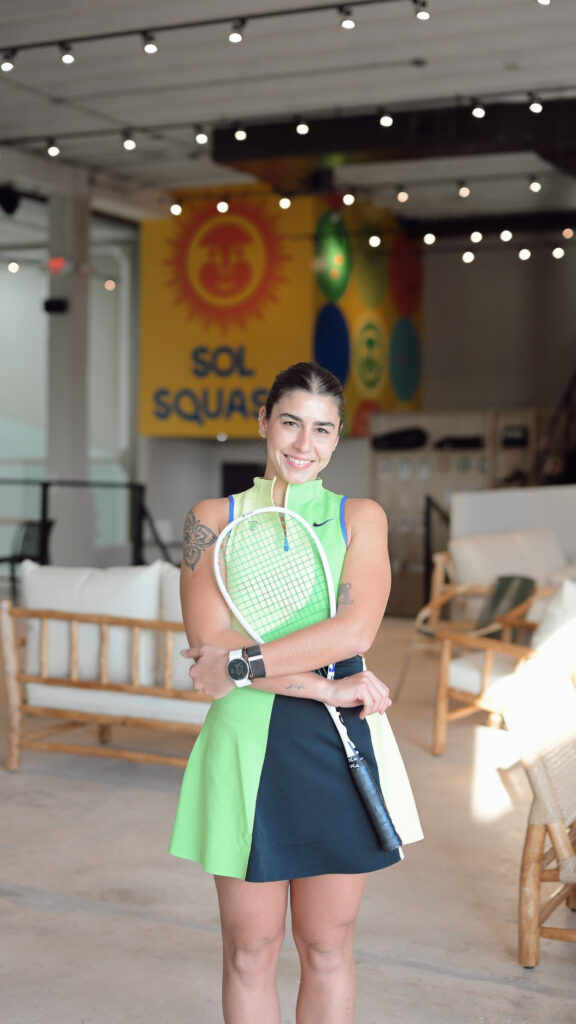
When Bruna Marchesi Petrillo and her husband Vini Rodrigues opened Sol Squash in Miami, they weren’t trying to replicate a traditional squash club. Instead, they set out to create a space built around community, accessibility and a new kind of squash experience. Drawing on their experiences across Brazil, London and the U.S., Sol Squash is quickly becoming not just a place to play, but a place to spend time, meet people and build a community around the sport. We caught up with Bruna to talk about building Sol, growing the game, and why Miami turned out to be the perfect place to start something new.
You came to squash a little later than many pros – what made you go all in?
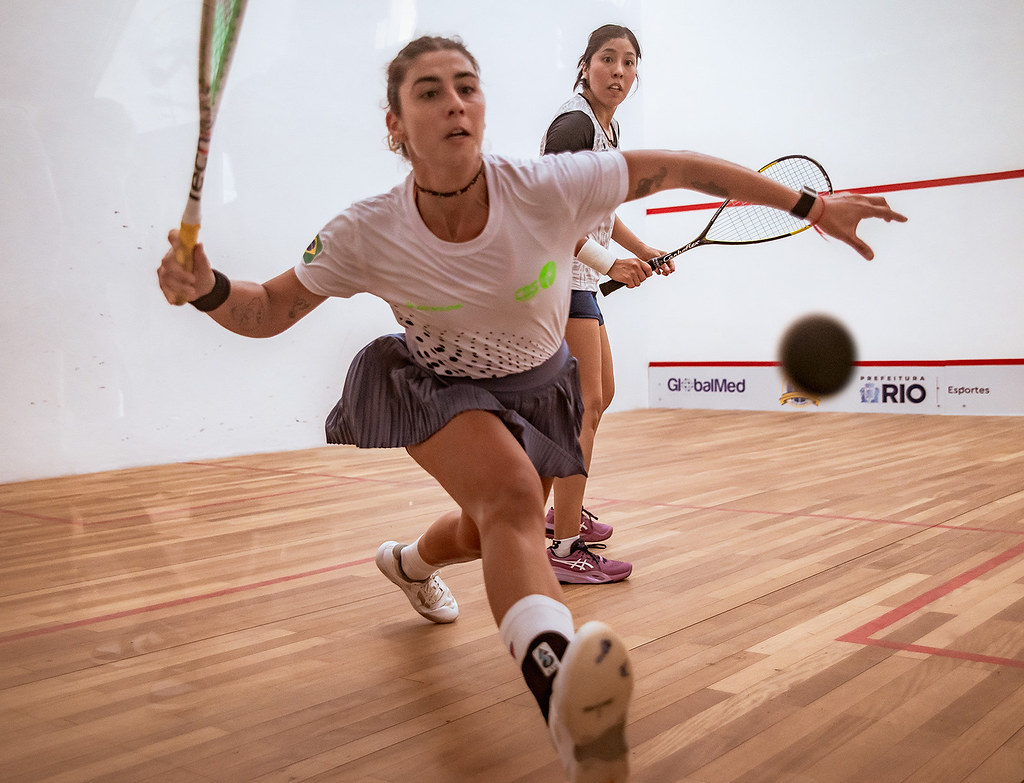
I was introduced to squash when I was about 13, but very casually. My main sport growing up was volleyball, which I played seriously through school and even for my university team while I was studying in London. Squash was always around, but it wasn’t really my world yet.
That changed when I met Vini, who had been a professional player for years. When you’re with someone whose life revolves around a squash court, you end up spending a lot of time there. At first I was just around, then I started hitting more seriously and started believing I could actually play. Before I knew it, I was fully into it, training, competing and really diving in.
What I love about squash is how intense it is. You can be completely exhausted after a session or match but still feel amazing. Once you experience that, it’s very hard to walk away.
You’ve experienced squash across Brazil, London, New Jersey and now Miami. How did those different environments shape your perspective on the sport?
Each place showed me a different side of squash.
In Brazil, it’s a niche sport but a very passionate community. London is a completely different world. Squash there is very social, especially for adults, and the level is very high. League match nights and club life there are really special, but many clubs are members-only, which can make the sport less accessible for new players.
In the U.S., it feels like there is a lot of opportunity for squash to grow. The racket sport world is booming, and I hope squash becomes a bigger part of that.
Seeing all these different environments made me realize that squash doesn’t have to look just one way. It can adapt, and that idea influenced a lot of what we are building at Sol.
Miami isn’t a traditional squash city. What made you believe this was the right place to build something new?
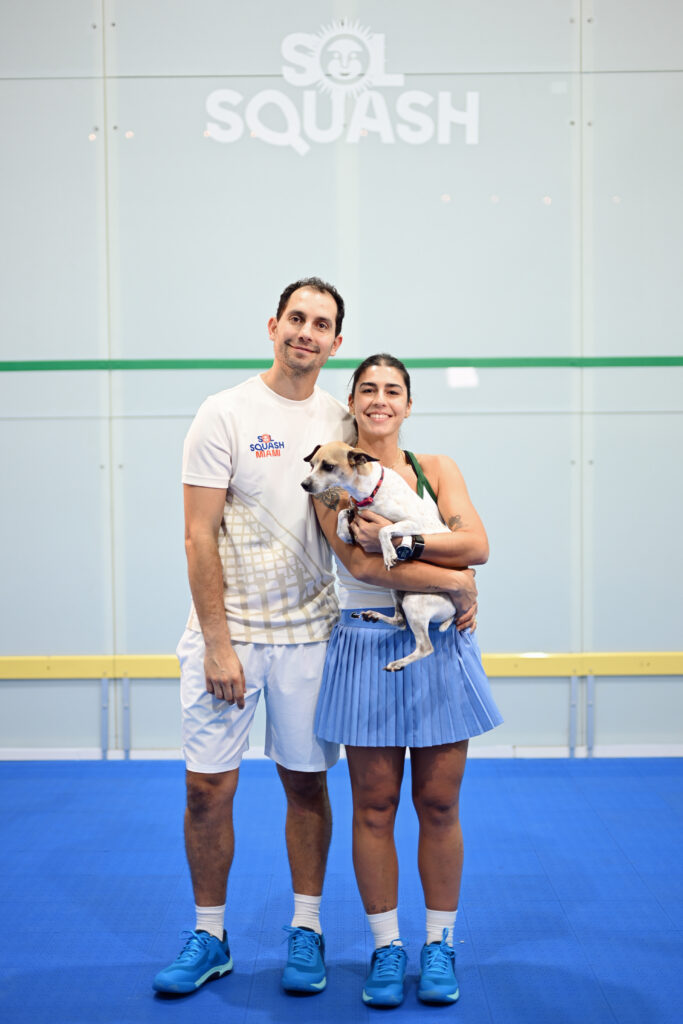
It’s definitely a challenge to start something from scratch, but that’s also what makes it exciting.
Miami didn’t have a dedicated squash club, and we saw that as a huge opportunity. The city has amazing energy. People are active, social and open to trying new things. Vini and I are both Brazilian, and Miami has a strong Latin American community, so that connection felt very natural to us.
One of the coolest things since we opened is seeing how many squash players were already here. People who love the sport but didn’t really have a place for it are taking their rackets out again. It showed us the interest was always there. It just needed the right space.
Sol feels intentionally different from a traditional club. What did you want people to feel when they walked through the doors?
I’m a bit outside of the box by nature, so from the beginning we didn’t want to just copy what already exists. We believe squash is an amazing sport, and we wanted to build something that reflects that within a space that is available and welcoming to everyone.
Squash is the center of the club, but Sol is a place where you come to play and also to stay. Hang out, talk to people, maybe do some work, bring your kids, train, recover. It’s not just in and out.
The sport itself carries something very unique. You can walk in feeling tired or stressed, and you leave as a completely different person — still tired, for sure, but feeling good, clear, alive. We wanted Sol to carry that same feeling.
More than anything, we wanted the club to feel familiar and light. You come for the game, but you stay because of how it feels to be there.
You’ve also been very intentional about creating a space where women feel comfortable and included. What have you learned about getting more women into squash and keeping them there?
Squash can feel intimidating at the beginning, especially for women who are just starting. So from day one we thought a lot about how to make that first step easier — creating sessions and formats where you don’t feel like you’re stepping into something alone.
But it’s also about being present. Vini and I are here every day, on court, talking to people, part of what’s happening.
And something I’ve noticed is that just by me being here consistently, it naturally creates a more comfortable space for other women and girls to come in.
 Sol’s first official group session was our Women’s Play, and we were really proud of that.
The first experience is everything. If it feels too intense or uncomfortable, people usually don’t come back. It has to feel guided, social, and something players can enjoy from the start.
In terms of retaining players, it becomes about consistency and connection. Small groups, regular sessions and women’s play sessions help people start recognizing each other, and it becomes something they look forward to. Not just a workout, but something social.
Women in sport have a huge role, and we see that in other racket sports. I really want to push that forward in squash here in Miami.
Having seen both established and emerging squash communities, what do you think the sport needs most right now to grow?
Better access, better storytelling, and spaces that people actually want to be part of.
Amateur players are a huge part of growing the sport because they bring friends and build community. Juniors and schools are also very important because that’s how people get introduced early and build a long-term connection with the sport.
The pro game also needs visibility. When people can watch the best players in the world, it creates inspiration and connection. Visibility grows the sport, and that benefits everyone in the ecosystem.
How are you thinking about positioning Sol as a destination for players, not just locally but from across the U.S.?
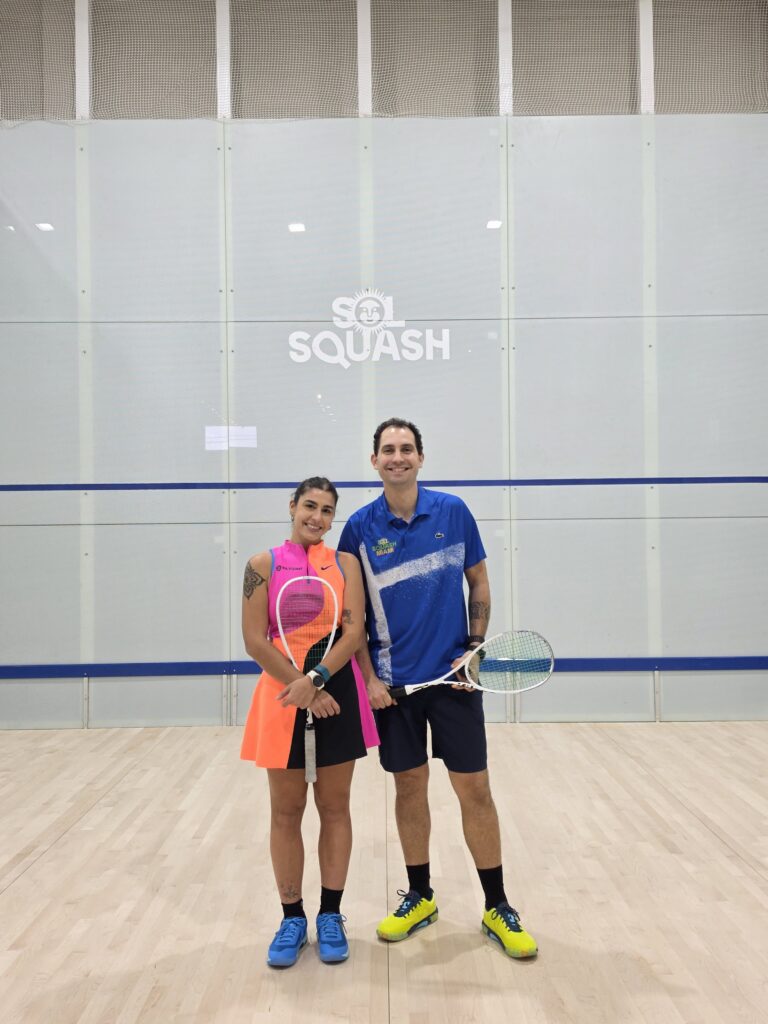 Being in Miami helps a lot!
We’re already seeing people wanting to combine travel and squash, which is really exciting.
There are a lot of ways this can work — people coming with friends for a fun, active trip, training hard and then enjoying the city. Families bringing their kids for camps while they also enjoy Miami. Players who want to train seriously but still be in a place that feels relaxed in between.
We’re thinking about all of that as we build what we offer.
Squash, sun, sea and sweat — Miami naturally has that, and we want Sol to be part of that experience.
Looking ahead, what is your long-term vision for Sol?
If Sol can help shift how people see squash, making it feel more open, more connected, and more part of everyday life, then we’re doing what we set out to do.
We want to invest in juniors and schools, help introduce the sport early, and create a space where anyone feels comfortable starting, no matter their age or level.
More than anything, I hope squash becomes a sport for life for more people. A sport that changes how you feel and becomes part of your routine and your community.
Sol Squash may be new, but the goal is simple: create a place where people come for squash, stay for the community and keep coming back.