


By Tor Gray
SquashWise, Baltimore’s long-standing squash and education program, has spent more than 15 years creating academic, athletic, and mentorship pathways for students from Baltimore City Public Schools. What began with a small group of middle schoolers has grown into a full pipeline of tutoring, squash training, college and career support and alumni programming that now carries participants well into their twenties. This winter marked a major milestone: SquashWise opened the doors to its new home inside the former Greyhound Station at Howard & Centre — a 24,000-square-foot historic building transformed into six squash courts, dedicated study and tutoring spaces, classrooms, a small gym, and communal areas designed for students to learn, train and genuinely belong. It’s a space that represents stability, possibility and a long-awaited home court advantage for Baltimore’s young players.
As SquashWise begins this new chapter, we spoke with Executive Director and co-founder Abby Markoe, whose leadership has guided the program from its earliest days to this transformational moment. In the interview below, Abby shares insights on what the new facility unlocks for Baltimore youth, how it strengthens pathways for girls and young women in the sport, and what she envisions for the future of SquashWise and the wider squash community.
What does this new facility represent for SquashWise at this stage in its journey?

SquashWise always dreamt of its own home, and now we have it with The SquashWise Center in the historic Greyhound terminal! The Center brings us much-needed stability after a five-year period of transition. For our first thirteen years, we had a stable home at Meadow Mill Athletic Club, which came to an end in 2021 when the club shut down during the COVID pandemic. Since then, we relocated to a small warehouse, where we rebuilt two of Meadow Mill’s courts, and were able to operate–but not grow–our youth program while we raised the needed funds to renovate the bus station.
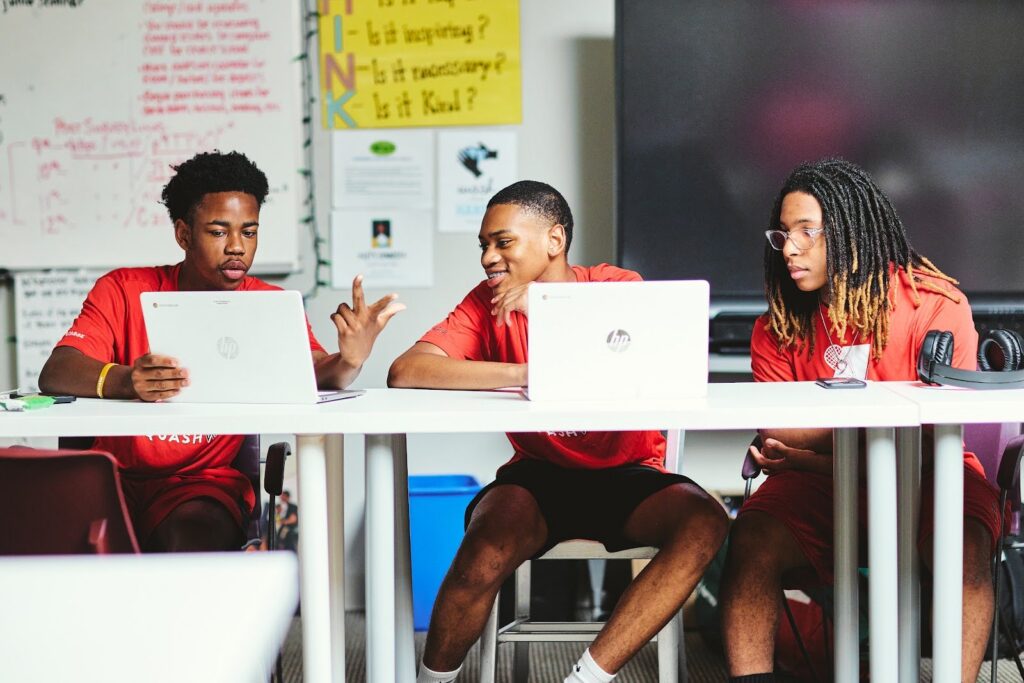
Now that the Center is up and running, we are able to settle our current students and staff into this beautiful space, and also begin growing our programs in new ways. At the SquashWise Center, our Youth Development Program will double in size, our School Squash program will expand its reach, and we will welcome the broader community through Community Squash programs and events.
What was it about this building that made you feel it could truly be the next home for SquashWise?
We had been searching for a home of our own for many years before purchasing the former Greyhound terminal. We knew that we needed adequate ceiling height – at least 18.5 inches; and we also needed adequate column width to accommodate our six courts. So, to start out, our requirements were very specific. Our courts seem like they were almost made for the former grand waiting hall of the bus station!
As a community-based youth organization working in Baltimore City, it was also essential for us to be in close proximity to public transportation. At the SquashWise Center, our city’s Light Rail system has a stop literally across from the main entrance, along with many bus lines nearby. Regionally, we are also highly accessible for players from out of town; Baltimore’s Penn Station is 1.5 miles away – a 25 minute walk or 8-minute taxi ride. This makes our space ideal for hosting tournaments and events.
SquashWise is so proud to be a part of the revitalization that is going on along Howard Street in downtown Baltimore, and we are also honored to be stewards of this important historic landmark. Many people have memories of the Greyhound station and the once-vibrant Howard Street corridor. When it was a bus station, people sought new opportunities, made connections, and reunited with friends and family. That sentiment lives on in our space today. The sounds of the hustle and bustle of travelers is now replaced with the “thwack” of the squash ball and the joy of friends and teammates cheering and socializing.
How does having a permanent facility change access to squash for Baltimore City students?
SquashWise is the only public school squash team in all of Baltimore, and one of only three public school teams in all of Maryland. Until now, we were always guests or visitors in other people’s spaces. Now, we are welcoming teams to our home courts. In the first three weeks of January alone, we hosted 11 matches against local private schools. It felt great to be the home team.
With our School Squash offerings, our coaches bring squash into Baltimore City Schools PE classes, and we will also begin to host field trips soon. Just Baltimore City Public schools seek out the National Aquarium or the Maryland Zoo for enriching field trips, SquashWise will be a unique offering for students.

And more broadly in the community–we will continue our existing work in women’s squash and also offer memberships at accessible price points to offer economic inclusion in the sport. We will offer lessons, clinics, and leagues, as well as monthly Community Squash Nights for players of all levels. The tagline is “no equipment, no problem” – SquashWise is a place for people to come as they are; to create connections through sport; and to expand their love of squash.
How do you see this new space strengthening participation, retention, and leadership opportunities for girls and young women at SquashWise?
SquashWise has always believed in the importance of access and inclusion in the sport. As a female leader and a squash player myself, I’ve always been attuned to the importance of coaching and supporting women of all ages and levels. SquashWise participates each year in Women’s Squash Week, and also offers free women’s and girls’ squash clinics each week. These clinics are coached by Board member, Susan Lawrence, former #44 in the world, and have previously been held at The Calvert School and at SquashWise’s temporary headquarters. We are excited to move the weekly clinics to the SquashWise Center in February, and to make SquashWise a real hub for the growth of women’s and girls’ squash in Baltimore.
What role do you hope SquashWise will play in Baltimore’s wider squash community over the next few years?
With the SquashWise Center, SquashWise will be able to more than quadruple our reach, between growth in our Youth Development Program and the addition of School Squash and Community Squash. We want SquashWise to be a place where people choose to spend their time, where social capital moves in all directions, and where people make connections that might not otherwise have happened in our city.
We also have a ton of potential to grow as a regional hub for squash events – local matches, regional tournaments, SEA (Squash and Education Alliance) leagues and events. Our location is so unique–squash courts in an old bus station–that we hope people will be drawn to visit and play on our courts.
The former Greyhound Station has a meaningful place in Baltimore’s public history. Did that legacy influence how you thought about creating a new kind of community space here?
SquashWise is highly attuned to the important legacy of the historic Greyhound terminal, and in fact, we have created a history installation on the first floor, detailing the history of the building and its centrality in the civil rights movement. While we did not set out trying to find a historic building for our program, renovating it has brought even greater potential for community awareness of SquashWise. Not only are we a draw for squash players, but we are of interest to the broader community interested in the history of the building and the revitalization of this part of Baltimore.

What’s the opportunity you’re most excited about now that you’re settled into the new center?
In just a few short weeks at the SquashWise Center, the excitement among our students is what stands out most. Our students and staff endured nearly five years of instability after the pandemic and the closure of Meadow Mill. We weathered a lot together, and now we finally have a place to call home. And it’s not just any place — it’s something truly special. Settling in as a team is what fills me with the most pride.
As for what comes next, I don’t think any of us quite grasp the full potential of what this Center will make possible — not yet. What I do know is that the energy inside these walls is real. We welcome anyone to come visit, see the space, and experience the magic our community is creating together.