


A Conversation with Suzie Pierrepont — Championing Women’s Doubles
Former World No. 25 in singles, World No. 1 on the SDA Pro Tour & current CEO of the Squash Doubles Association
 With experience as both a top player and now as CEO of the SDA, Suzie Pierrepont brings a unique perspective to the evolution of women’s doubles. In this conversation, she reflects on her transition into the doubles game, the community that continues to shape it, and her vision for expanding opportunities and growing the women’s side of the sport.
Q&A with Suzie Pierrepont
1. You had an incredible singles career before transitioning into doubles. What first drew you to the doubles game?
I actually didn’t like doubles at first, coming from singles and found it really frustrating! Once I started playing more, I got into it and really loved playing with a partner and having it be more of a team sport. When I stopped playing PSA, doubles filled the gap of remaining competitive, which made leaving singles behind much easier.

2. What were some of the biggest adjustments you had to make — technically, tactically, or mentally — when moving from singles to doubles?
It’s just so different that it helped me to think of it as a different sport. When you play singles, you’re conditioned to get to the tee, hit rails, play straight drops, etc., and all of those will get you into trouble on a doubles court — you have to do the opposite of what you’ve been told for singles! Angles, sidewalls, and not clearing to the middle.
The good news is that if, in singles, you struggle to hit straight, you hit too many boasts, and you get told you hit it too hard — doubles might be your game!
The hardest part of converting to doubles for me was learning when to leave the ball for your partner to hit. It’s hard for the singles brain/ego to get comfortable not hitting every ball that comes your way, but it’s also nice to share the responsibility.
3. You’re now leading the SDA Pro Tour as CEO. How has stepping into that leadership role influenced your perspective on the sport?
Coming into this role, I knew we had a strong and supportive community in North America, but I didn’t realize just how big and enthusiastic it truly was until I started working with both the men’s and women’s events. That’s when I really began to understand how much these tournaments mean to our host clubs and their members. The depth of support for our sport, and the wonderful people we meet everywhere we go, has been incredibly encouraging.

4. Doubles is sometimes viewed as something players “graduate” into later in their careers. What would you say to younger or club-level women who might be curious but hesitant to try it?
Don’t wait! There is no reason not to play both if you have access to a court — it’s not an either-or decision, so what’s the harm in trying? If you’re curious, maybe jump on an empty court and have a hit by yourself to get started. Talk to your pro or someone you know who plays and ask to be introduced to some friendly faces, and go from there.
I think if you’re willing to jump in and try, you’ll be surprised how quickly you start getting asked to play in games — no one loves a new contact like someone trying to find a fourth for a doubles game!
5. What do you think makes women’s doubles special — in terms of the community, the dynamics, or the energy on court?
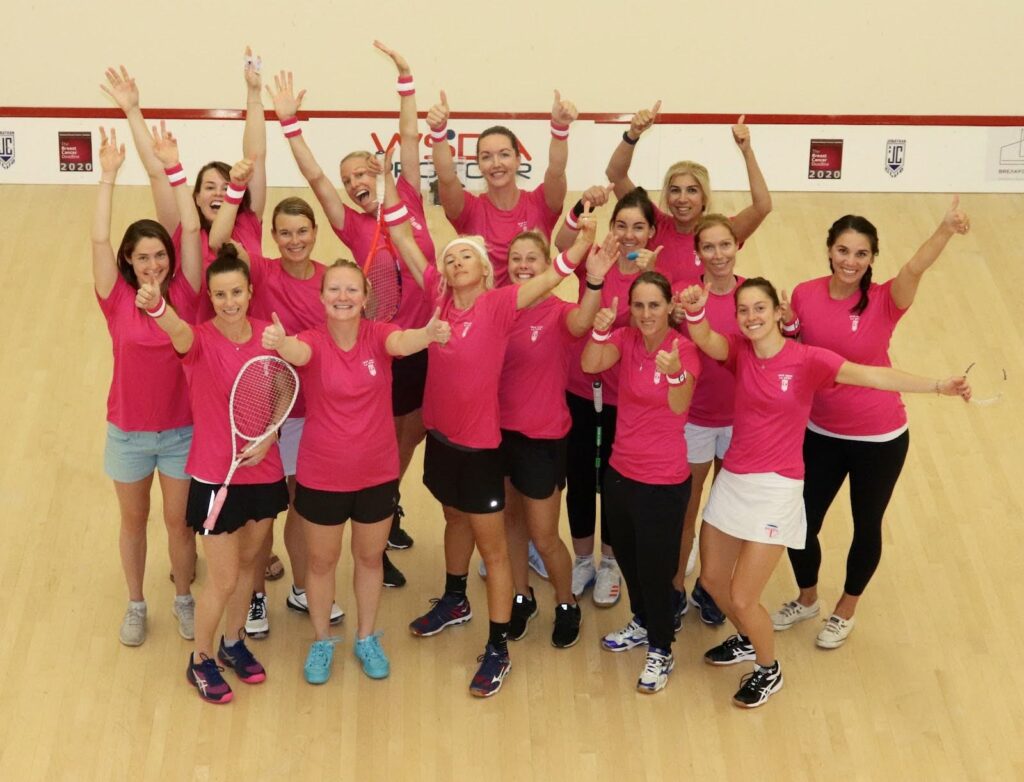
What I find remarkable is the support the women give each other — something that’s surprising in highly competitive environments. On court, they’re absolute adversaries, but they step off court and become allies again, cheering each other on, offering advice, and celebrating each other’s wins — on court and in life generally.
What makes it even more special is the range of life experiences within the group. Some players are fresh out of college and just starting to find their footing in the adult world. Others are juggling careers and young families, squeezing in matches between school runs and nap schedules. And some are retired, bringing a wealth of experience and perspective.
For women in the squash world, which can often feel very male-dominated, having this kind of community to connect with is incredibly important. I love overhearing the older players talking with the younger ones about work, offering advice on tough situations or tricky conversations, or watching players swap parenting tips and workout plans. Honestly, the women’s “locker room” chat is more useful than a TED Talk!
6. Is there a particular match or moment from your doubles career that really captures what you love about the game?
Winning the U.S. Nationals at my home club, The Denver Athletic Club, with Meredeth Quick is one of my favorite squash memories. We had so much support from our home crowd, and the win meant a lot because the DAC is a special club to both of us.
Meredeth grew up playing at the club, and I joined when I moved to Denver for grad school, so it felt like a true team win.
7. Looking ahead, what are some of your goals or hopes for the women’s doubles scene in the next few years?
More players — that’s it. That’s the goal.
The standard of play at the collegiate level now is just fantastic. Those women are so good, and I just want as many of them as possible to get into doubles. They put so much work into their games, and when college is over, I want them to feel like they still have an opportunity to use all that skill and training, and have an outlet for their competitive side — the same way I did when I got into doubles.
8. The SDA has made big strides in recent years. What does progress look like to you — in terms of participation, visibility, or the next generation of female players coming through?
A big goal of mine for the coming seasons is making sure the next generation of players coming through the college system actually knows the SDA is here for them. We want these exceptional women to see what opportunities exist after college and what competitive play can look like beyond the varsity world. My hope is that we can give them clearer visibility and more information so they feel excited about what comes next.

Inspired to give doubles a try?
Ask your local club about women’s doubles sessions, clinics, or league play — or check out the SDA Pro Tour to see the pros in action. There’s no better way to build skills, strategy, and community all at once.